
Clean. Closed. Compressed. Cured. Composite.
MJM C5® Advanced Manufacturing Process
C5® is MJM's advanced composite construction process and the structural foundation of every yacht we build, developed through aerospace-inspired innovation and refined over decades of composite evolution to deliver exceptional strength, reduced weight, durability, and performance efficiency. It is not traditional fiberglass construction, but a fully engineered composite system designed to enhance ride quality, improve efficiency, and support long-term structural integrity.
What Is C5®?
A Closed-Mold Epoxy Composite System
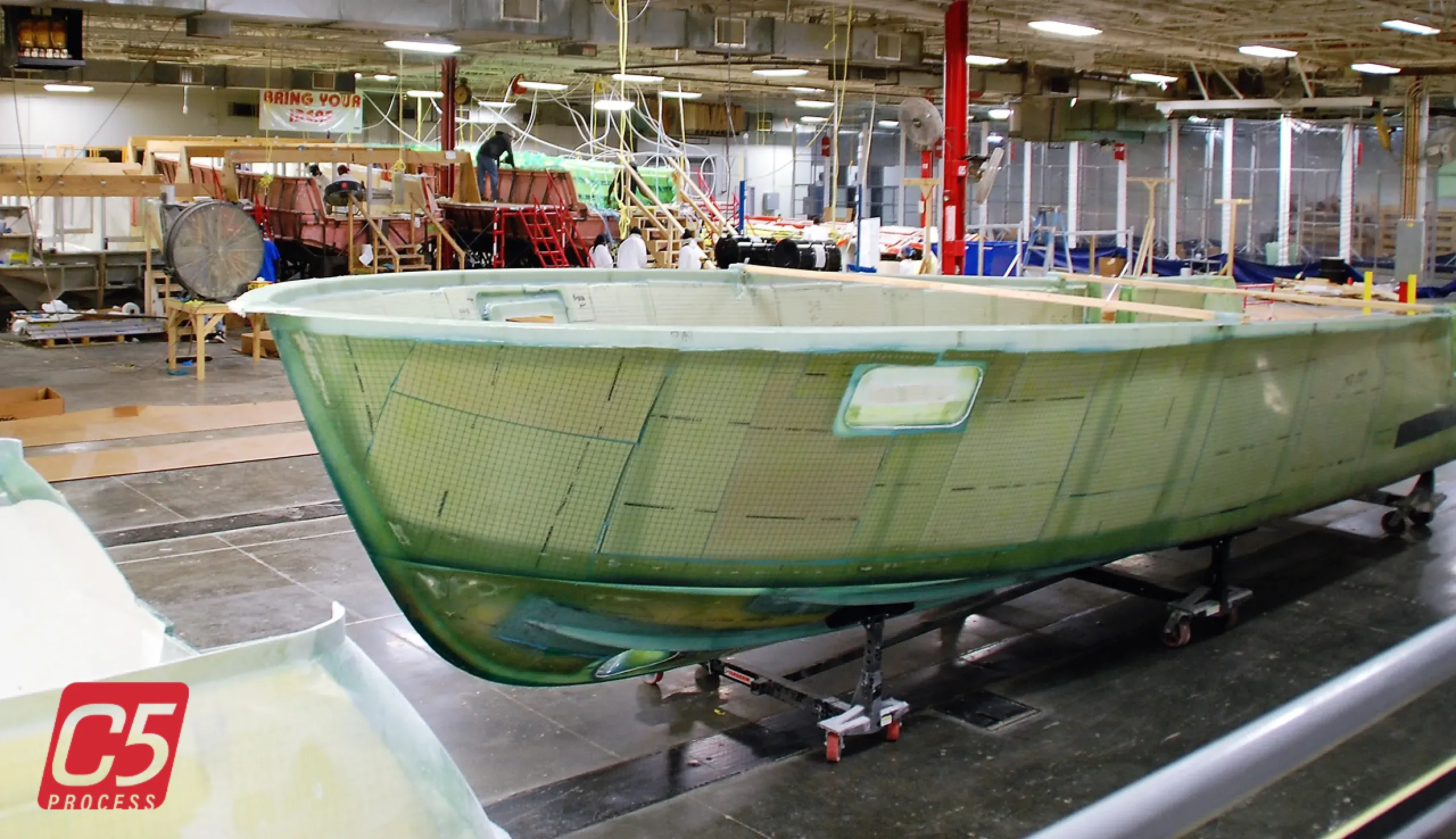
C5® stands for Closed, Compressed, Clean, Oven-Cured Composite. The process uses vacuum-infused, post-cured epoxy composite construction to create structures that are stronger and lighter than conventional open-mold fiberglass methods.
Unlike traditional wet layup techniques, C5 is a fully closed-mold system that compresses precisely stacked layers of biaxial E-glass and closed-cell foam core under vacuum. The result is optimized glass-to-resin ratios, stronger bonding, and consistent structural integrity throughout the hull and deck.
Aerospace Lineage and Composite Evolution
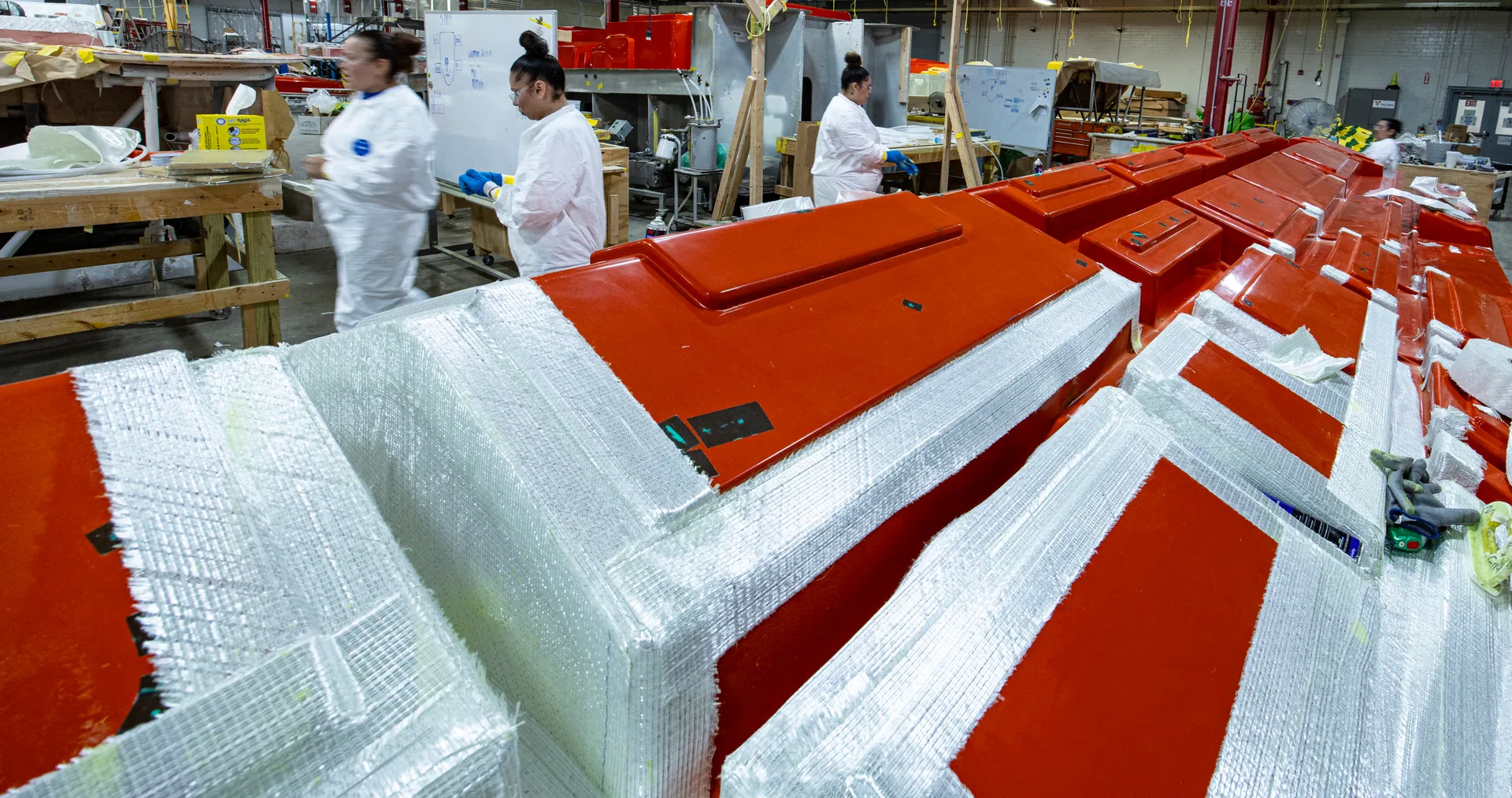
The C5 process draws from technologies pioneered in aerospace and high-performance marine construction. Materials such as closed-cell foam core and advanced epoxy resins evolved from industries requiring strength, lightness, and durability under extreme conditions.
Vacuum infusion techniques, including SCRIMP-based resin transfer systems, transformed composite manufacturing by allowing:
Precise fiber orientation
Controlled resin saturation
Reduced excess resin
Improved strength-to-weight ratios
C5 builds on this lineage with a controlled, closed, post-cured process engineered specifically for MJM hull forms.
Innovation & Continuous Improvement
To innovate, improve, and lead, MJM set up its dedicated high-tech composites factory to apply the latest clean and closed aerospace composite techniques. MJM enlisted some of the brightest minds to develop a new process to lead the yacht market in lightweight, high-strength composites.
A five-year multi-million-dollar investment in development yielded our next-generation composite process.
The C5® Process
How the C5 Process Works

Dry Stacking Engineered Composites
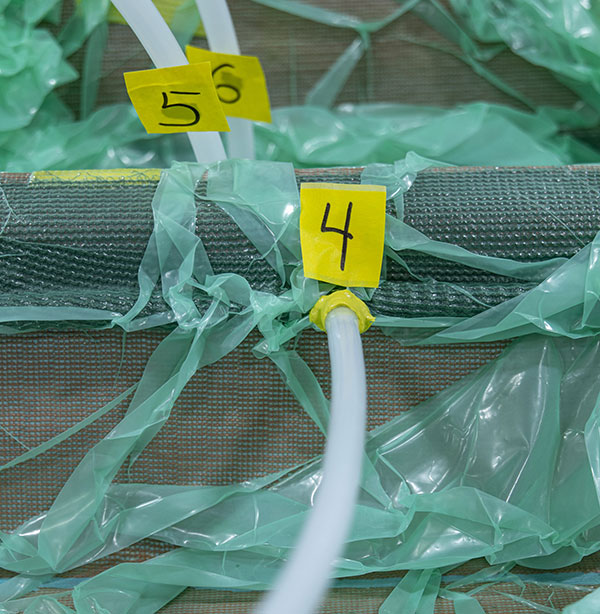
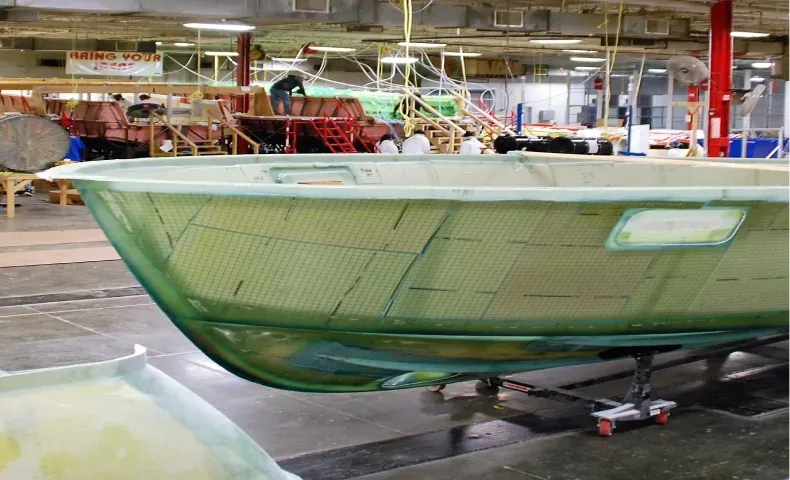
Precision table-cut E-glass and CNC-cut structural foam composite layers are dry-stacked in the mold without epoxy. E-glass overlaps and fiber orientation are positioned strictly for engineered performance. The structural foam is tightly fit and free of gaps.

High-Tech Membrane
A high-tech membrane covers the dry stack to allow air and gases out and resin in. After the epoxy hardens, it is removed.

Closed Process
An impervious sealing layer makes C5® a closed vacuum process devoid of air.

Compression of the Dry Stack
High-capacity pumps vacuum the air from the closed process to 20 millibars. The atmosphere is at 1000 millibars, so the dry stack of E-glass and foam core is compressed by 2000 lbs per square foot of atmosphere. The woven E-glass compresses to half its volume, reducing the epoxy volume by half.

Epoxy Mixing
Our custom-developed epoxy resin formulation is precisely mixed by machine for the vacuum infusion process.

Closed Vacuum Epoxy Infusion
The epoxy is drawn into the compressed dry stack vacuum, combining the composite layers into one bonded structural unit, akin to an I-beam. No fumes, odors, or volatile organic compounds are emitted into the environment. The epoxy is contained within the closed vacuum process, which achieves a 30% resin to 70% E-glass ratio, on par with the highest-performance aerospace composite processes.

Convection Oven for Post Curing
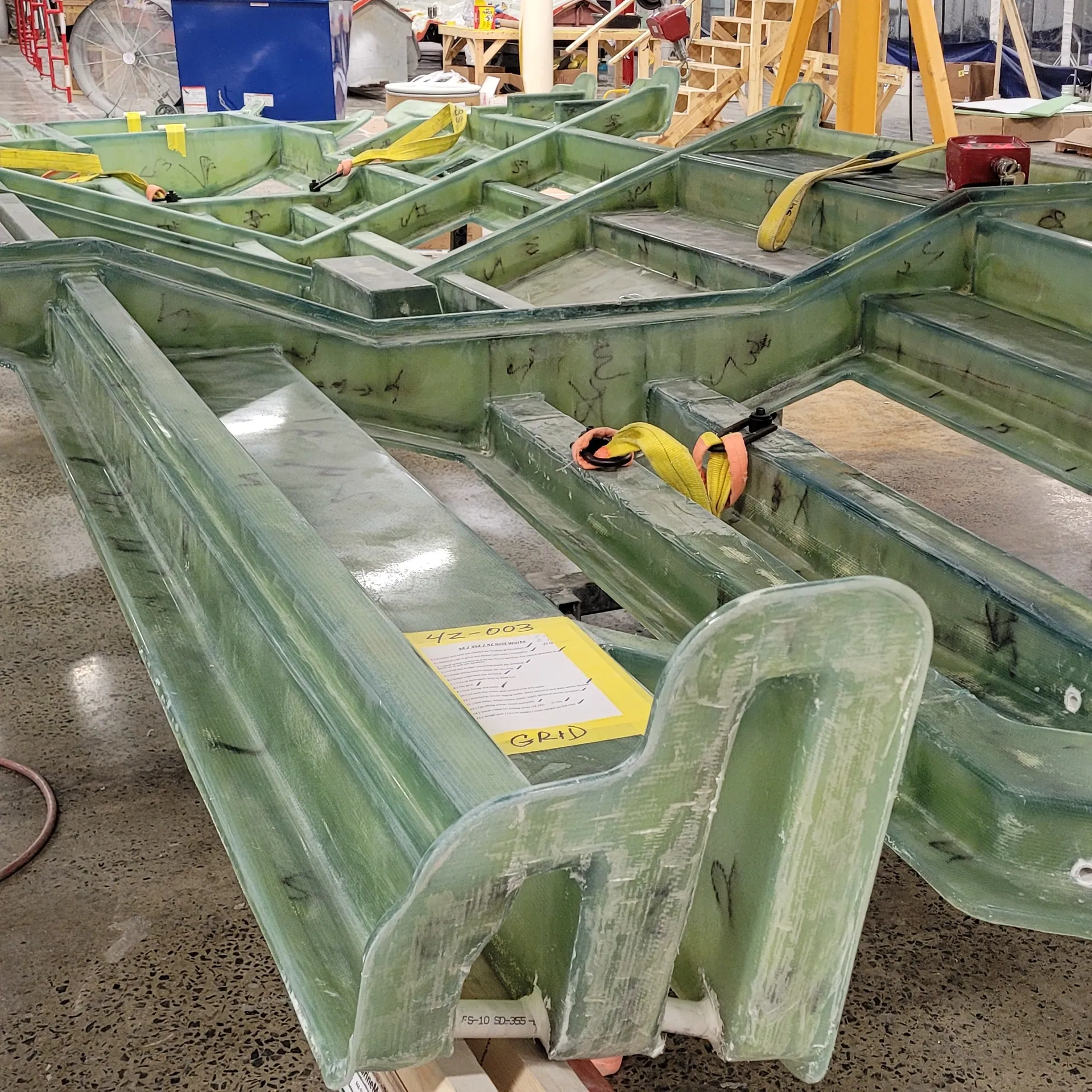
The hull, structural grid, deck, and pilothouse roof are post-cured at 185F degrees for 8 hours in MJM’s custom-built high-tech 20’ x 60’ convection oven. Sixteen thermocouples measure and log the composite temperatures across the part to ensure an even post-curing cycle. Why is post-curing beneficial? The heat transforms the epoxy by cross-linking the polymers, leading to a 30% increase in part strength—just from cooking! No other production boat builder delivers the sophistication, data, and controls of MJM’s high-tech post-curing process. The custom convection oven and its computer controls are unprecedented.
The Advantages of C5®
Strength. Weight. Performance.
MJM's C5® Process is applied to our hulls, structural grids, decks, arches, lids, and pilothouse roofs.
Lower Center of Gravity
A lighter hull and structural assembly reduce motion and improve stability, allowing a smoother and more secure feel underway.
Lighter Weight
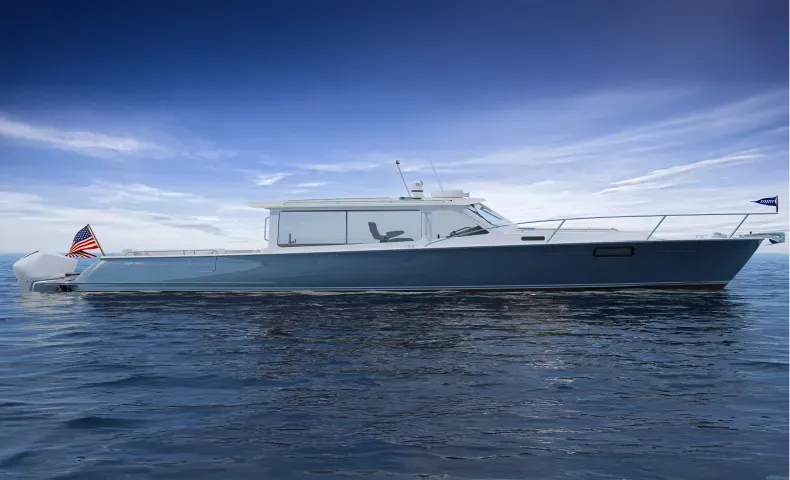
Narrower waterplane for less motion through a seaway
Level acceleration without bow rise
Planing begins at low speeds (around 12 knots)
Superior speed and fuel economy from less horsepower
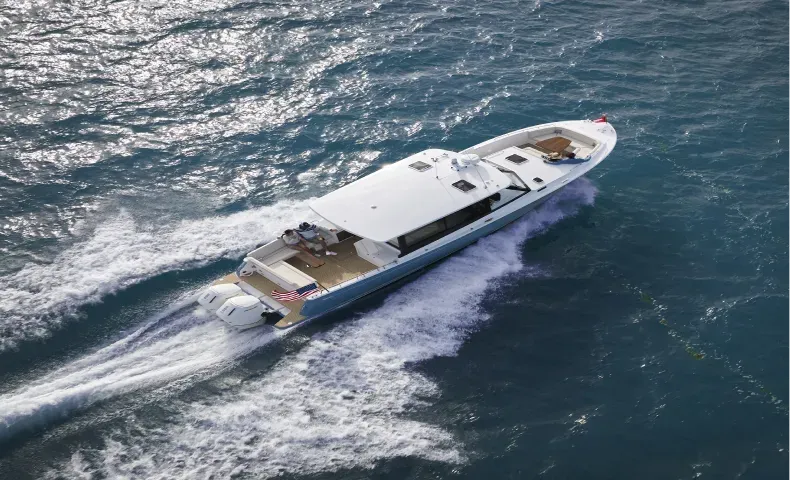
Greater Strength
Quieter, tighter, more solid feel in rough conditions
Enhanced impact resistance and elemental durability
Structural integrity designed to endure over decades
Cost of Ownership
Innovation & Continuous Improvement
When the composites were studied under a microscope, our former process showed the E-glass adhered to the tops of each bead of the foam core surface. The C5® process enveloped each foam core bead completely and bonded to the entire foam core surface, forming adhesive and mechanical bonds between the E-glass skins and the structural foam core. MJM's C5® Process is a leap in technology vs the earlier wet-preg process. Compared to typical production powerboats, MJM's C5® process typically delivers half the weight and twice the strength.
25%
more strength
MJM yachts maintain value and capability across decades.
15%
less weight
over more traditional materials and processes.
The Luxury Of Comfort
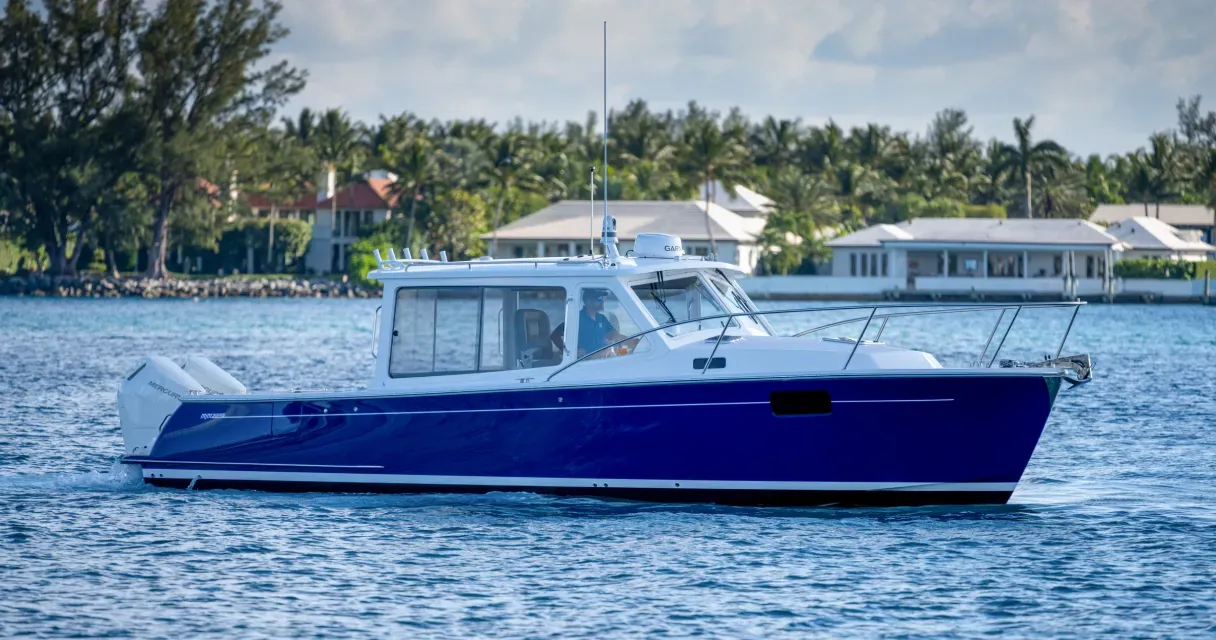
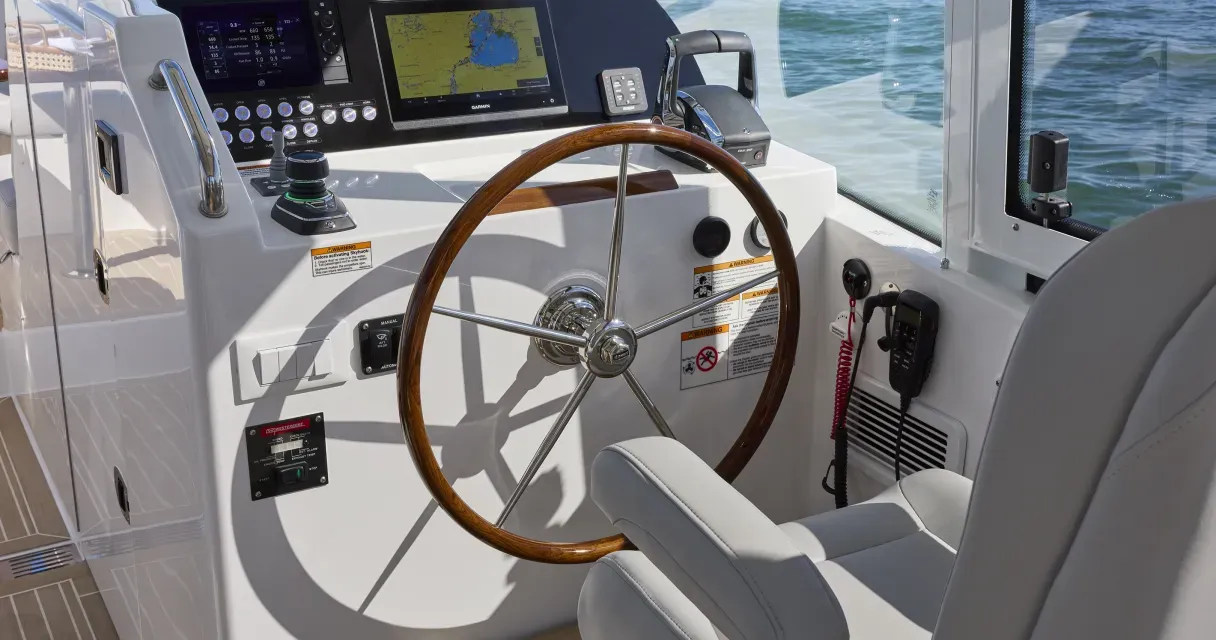
Ride comfort is our goal. Regardless of sea conditions, MJMs can enjoy any day on the water with a smooth, soft ride. The MJM C5 Process provides a lower center of gravity for less motion. The narrower waterplane allows the hull to knife through seas. The spray chines redirect the water's energy outward and downward to dampen roll in a seaway. An MJM does not endure the slamming and pounding that jolts families on wider, heavier yachts. The smoother ride minimizes fatigue, allowing a longer running day.
Efficient Performance Delivering More with Less
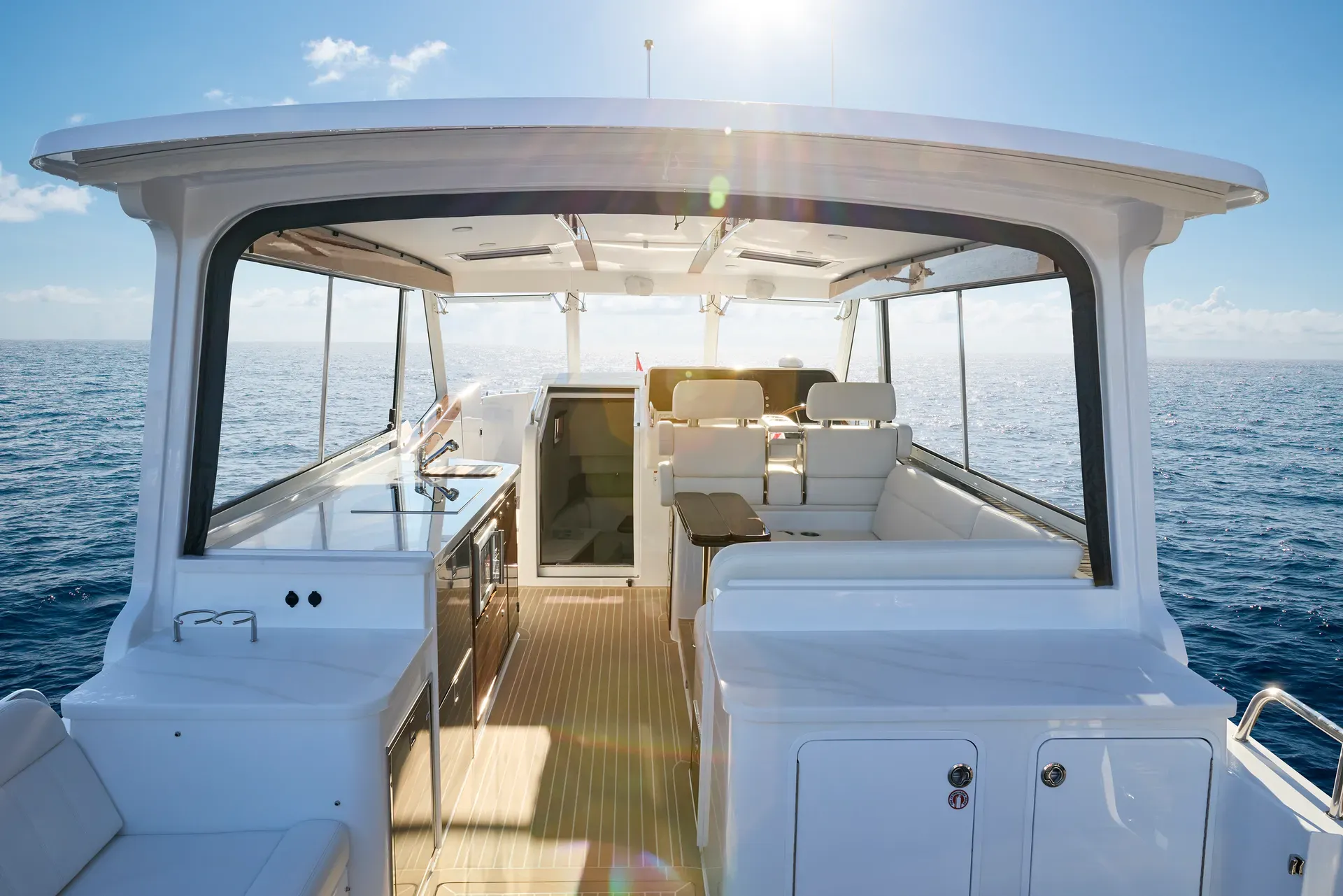
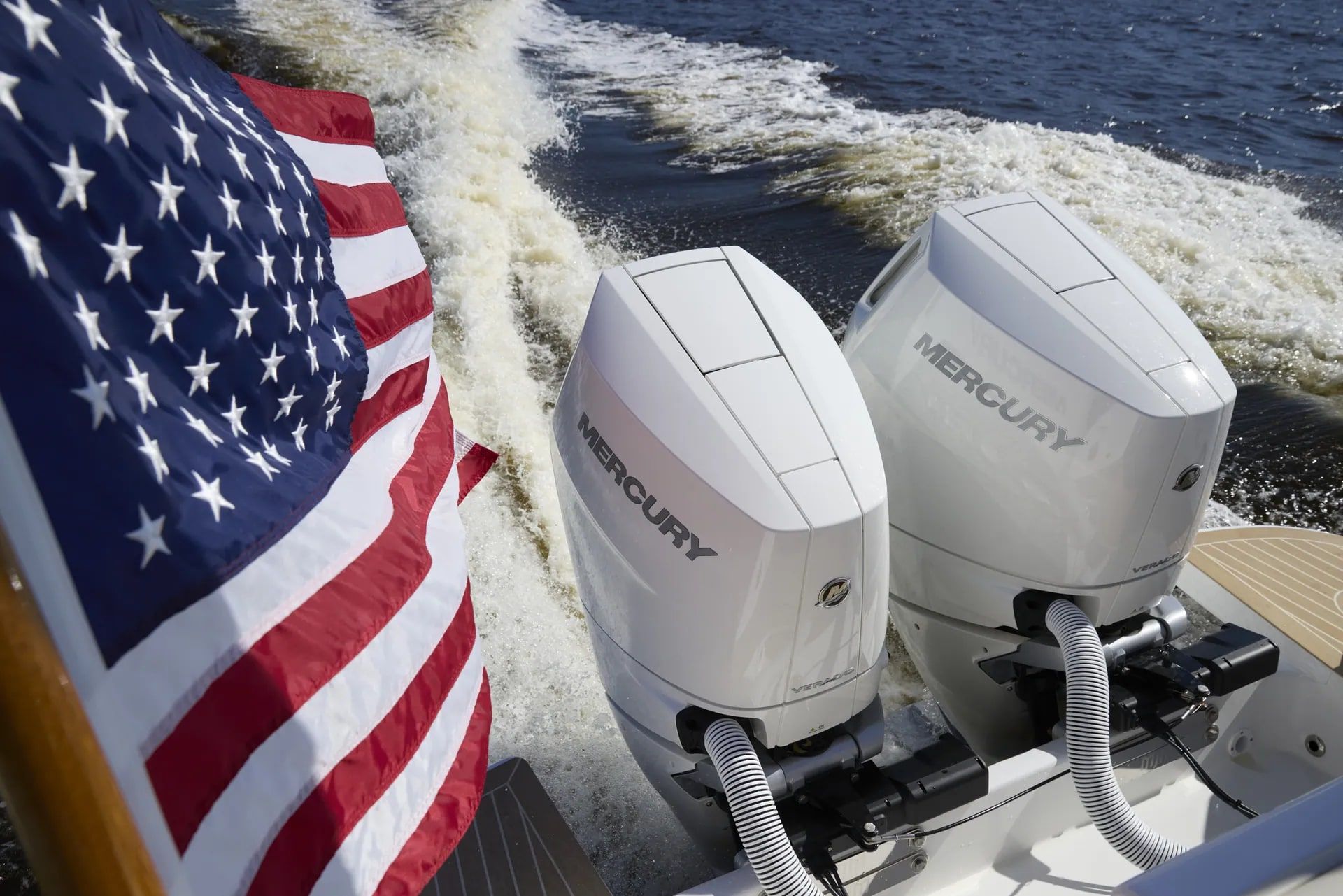
Less weight, a narrower waterplane, and low-speed planing reduce the need for horsepower. An MJM delivers more fuel efficiency and speed with less horsepower. The key differentiator is our C5® Process, which is half the weight and twice the strength. High-tech composites make MJM a unique high-performance yacht. You can go further and stay out longer. Spend more time out there and less time at the fuel dock!
The Carolina-Downeast Design Vision
The MJM C5® Process makes key MJM differences possible: fast and fuel efficient, a solid and smooth ride, with comfort and safety in any condition. When you take the wheel of an MJM, you will instantly feel the difference. An MJM accelerates and handles like a sports car. Your family will enjoy the ride; you will enjoy the responsive handling.
FAQs
Common questions about C5® construction and what sets it apart
Yes, heavier, low-tech boats cost less money. The builders focus on minimal mold cycle time and rely on copious amounts of resin to wet out low-tech fiberglass materials. Remember that you must double the horsepower to drive a heavier boat at the same speed for the rest of that boat's life. You will consume up to double the fuel every time you go boating. A heavier boat typically needs 20+ knots of speed to plane. The bow will rise until on a high-speed plane, making safe and comfortable operation between 10-20 knots challenging.
Epoxy is stronger and more elastic. It can stretch 6% before breaking. It is impervious to water, so an epoxy composite has no risk of moisture intrusion and osmotic blistering as polyester boats can endure. Polyester is a cheap resin that can only stretch 1%. Polyester fails before the stretch limit of fiberglass, which is why you see crazing on many volume production boats. Vinylester is between Epoxy and Polyester. Like Epoxy, it is impervious to water. Most boat manufacturers use a Vinylester skin behind the gelcoat to prevent osmotic blistering but then utilize cheaper polyester resins for the bulk of their lamination.
Infusion begins with molds built to an infusion vacuum-drop specification. Typical production molds are too porous for the vacuum infusion process. Air seeps right through the mold surface, preventing an adequate vacuum. Infusion molds cost more and take longer to build. You cannot simply convert existing production tooling to an infusion process. Every mold must be built to the process. Most builders are wed to their outdated processes and defend them for a reason. The investment in all new tooling would be too high. It would take 10+ years to change over all models to infusion specification tooling. Training an entire composite staff to perform the vacuum infusion process can take 12-18 months. Mastering the process for reliable production can take 4-5 years. Most established builders will choose to keep their inferior existing processes rather than invest. Remember, if it is an open and wet process, it is an old and inferior process.
Carbon can make sense when used as local reinforcing and highly loaded parts like arches. It is more suitable for widespread use in racing, where longevity is not a concern. Carbon costs more and delivers more noise and higher repair bills. Some of the downsides of carbon:
1. The CE Skin Thickness Scantlings Make it Pointless to Use The composite skin scantlings within the CE building code for composites require minimum skin thicknesses for impact resistance, regardless of the material. E-glass skins deliver far more strength and rigidity than structural engineering requires. If you were building a disposable racing boat without the CE code skin thickness requirement, you could utilize thinner skins to save weight with carbon. In the recreational market, most top builders will conform to the CE code for skin thicknesses, or risk significant liability.
2. Carbon Corrosion Issues A yacht uses hundreds of SS fasteners and component. Carbon and SS begin corroding on contact, risking the long-term integrity of SS fasteners and components. The saltwater environment speeds up the corrosion process.
3. Carbon Electrical Grounding Issues Carbon is the most efficient conductor of electricity. A modern yacht is brimming with electrical luxuries. The fasteners can bridge the electrical equipment to the carbon structure, creating a ground current. The entire carbon structure can become electrically charged. Underwater metal is particularly vulnerable to such electrical grounding issues, leading to rapid pitting and deterioration. It is nearly impossible to troubleshoot and resolve an electrically charged carbon structure without removing every fastener and system aboard.
4. Carbon Lightning Issues Vacuum infusion processes can successfully integrate carbon without air voids. Wet composite processes will have air voids despite builders' best efforts. Why are air voids such a risk? When lightning strikes a yacht, it takes the most conductive path. Carbon is the most conductive material available. Lightning will run through carbon, rapidly heating any resistance, such as air voids. The air instantly heats and expands, blowing apart composites around the expanded air void. A lightning strike blew out 100+ air voids in one wet laminate carbon racing sloop. The entire hull had to be rebuilt. Would you place your family at risk?

Find your dealer
Connect with a dealer to discuss your next yacht.

Contact us
Connect with an MJM dealer or reach out to us directly.
Stay in the loop
Sign up for our newsletter.